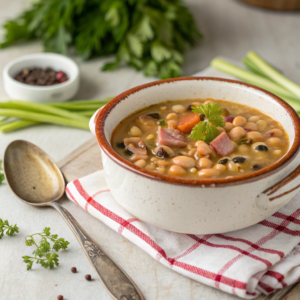
There’s nothing quite like a pot of Southern-style black-eyed peas simmering away on the stove, filling your kitchen with that irresistible aroma of smoky pork and savory seasonings. This traditional recipe honors the time-tested method of cooking black-eyed peas low and slow with bacon, ham, and simple spices to create comfort food at its finest. Whether you’re honoring the New Year’s Day tradition for good luck and prosperity or simply craving authentic Southern country fare, these creamy, flavorful peas deliver every single time. The combination of crispy bacon, meaty ham bone, and tender peas creates layers of flavor that can’t be rushed. This is soul food in the truest sense—humble ingredients transformed into something deeply satisfying through patience and proper technique. Serve them as a hearty side dish alongside cornbread and collard greens, or enjoy them as a comforting main course that’ll warm you from the inside out all year round.
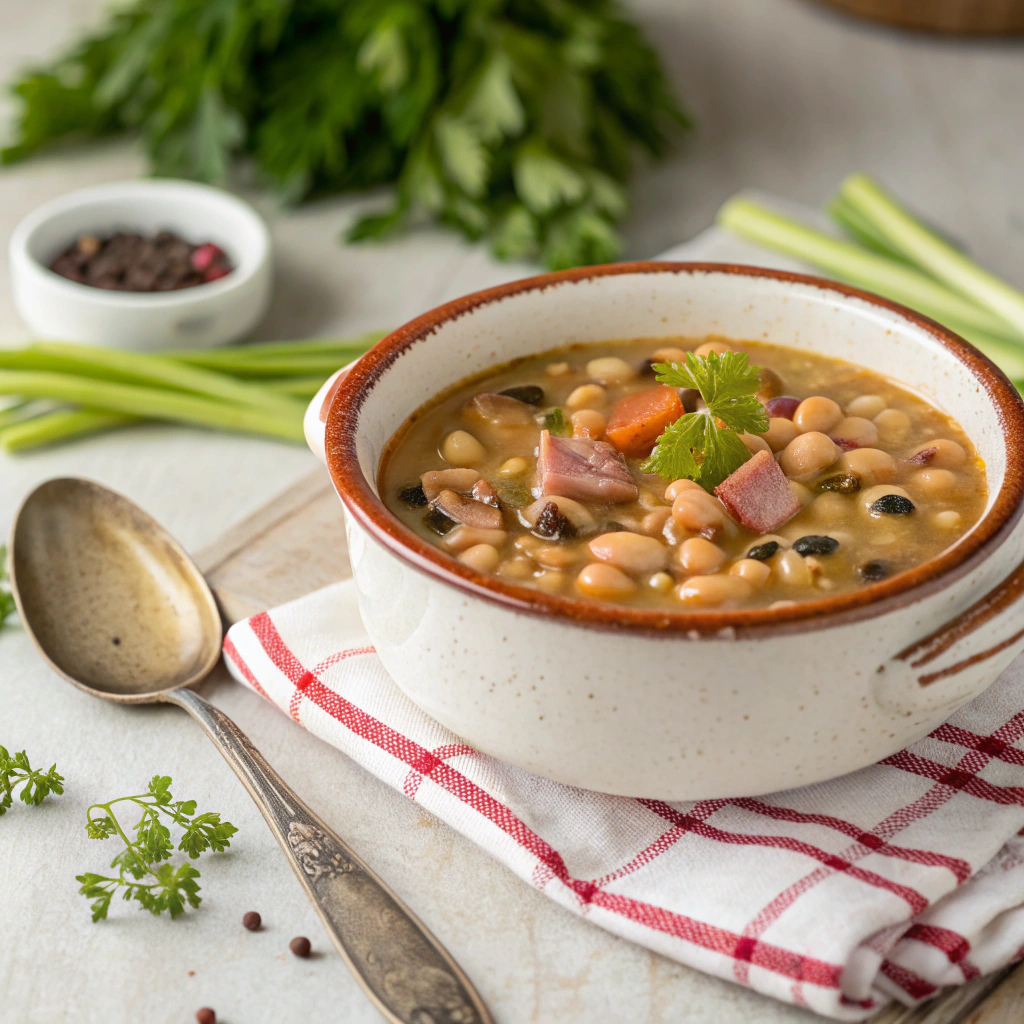
Prep Time: 10 min | Cook Time: 1 hr | Total Time: 1 hr 10 min (plus soaking time if using dried peas)
Key Ingredients
For the Peas:
- 1 pound dried black-eyed peas (or 1.5 to 2 pounds fresh black-eyed peas)
- 3 to 4 slices bacon, cut into pieces
- 1 ham bone with meat (ham hock or ham shank)
- ½ cup yellow onion, diced
- 2 cloves garlic, minced (or 2 teaspoons jarred garlic)
- 1 to 1½ teaspoons salt (or to taste)
- ½ to 1 teaspoon black pepper (or to taste)
- 5 to 6 cups chicken stock (add more broth or water as needed)
Optional Additions:
- Pinch of red pepper flakes or cayenne pepper for heat
- Hot sauce or spicy vinegar for serving
Substitution Notes: Turkey bacon can replace regular bacon for a lighter option. Smoked turkey legs or necks work beautifully instead of ham for a different smoky flavor. Vegetable broth can substitute for chicken stock, though you’ll lose some depth of flavor.
Step-by-Step Instructions
1. Soak the Peas (If Using Dried) You have two soaking options depending on your schedule:
Overnight Method: Place the dried black-eyed peas in a large bowl and cover with cold water by 2 to 3 inches. Add about 1 teaspoon of salt to the soaking water. Let sit at room temperature overnight (8 to 12 hours). In the morning, drain and rinse the peas.
Quick Soak Method: In a large pot, bring 6 to 7 cups of water to a rolling boil. Add the peas and salt, then immediately remove from heat. Cover and let the peas rest in the hot water for 30 minutes to 1 hour. Drain and rinse when done.
If using fresh or frozen black-eyed peas, skip this step entirely—they’re ready to cook as is!
2. Cook the Bacon In a Dutch oven or large heavy-bottomed pot, cook the diced bacon over medium-high heat for 5 to 7 minutes until crispy and the fat has rendered. If you prefer bacon flavor without the texture, leave the slices whole for easy removal later. Remove the cooked bacon to a plate, but leave all those flavorful bacon drippings in the pot. You can reserve some crispy bacon pieces for garnishing later.
3. Sauté the Aromatics Add the diced onion to the bacon grease and cook for 1 to 2 minutes, stirring frequently, until the onion becomes translucent and fragrant. The onion will pick up all those delicious brown bits from the bottom of the pan. Add the minced garlic and cook for another minute, stirring constantly so it doesn’t burn.
4. Season Stir in the salt, black pepper, and red pepper flakes if using. Let the spices toast in the hot oil with the onions and garlic for about 30 seconds to bloom their flavors.
5. Add Liquids and Peas Place the ham bone or shank into the pot, nestling it among the aromatics. Pour in 5 to 6 cups of chicken stock (use 5 cups if working with fresh or frozen peas, 6 cups for dried). Add your drained soaked peas (or fresh/frozen peas). The liquid should cover the peas by about an inch—add more stock or water if needed.
6. Bring to a Boil Cover the pot with a lid and increase heat to medium-high. Bring the mixture to a full rolling boil. You’ll see vigorous bubbles breaking the surface.
7. Simmer Until Tender Once boiling, reduce the heat to low and maintain a gentle simmer. Cook for 1 to 1½ hours for soaked dried peas, or 45 minutes to 1 hour for fresh or frozen peas, or until the peas are fork-tender and creamy. Stir occasionally and check the liquid level—as the peas cook, they’ll absorb liquid and may need more broth or water added. The cooking time can vary based on the age and freshness of your peas, so taste-test for doneness.
8. Remove and Shred the Ham When the peas are tender, carefully remove the ham bone from the pot using tongs. Let it cool slightly on a cutting board, then use two forks to pull the meat from the bone. Shred or chop the ham meat into bite-sized pieces and discard the bone and any excess fat.
9. Adjust Consistency Check your peas for the desired consistency. For a brothier, soupier result, stir in additional chicken stock or water until you reach your preferred texture. For thicker, creamier peas, you have two options: use an immersion blender to puree a portion of the peas directly in the pot, or scoop out about 1 cup of peas with some liquid, mash with a potato masher or fork until smooth, then stir back into the pot. Keep in mind that the peas will thicken as they sit, especially if using dried peas.
10. Finish and Serve Return the shredded ham meat to the pot and stir to combine. Taste and adjust seasoning with additional salt and pepper if needed. Serve hot with spicy vinegar, hot sauce, or your favorite Southern condiments. Top with reserved crispy bacon if desired.
Serving Suggestions
- Traditional Southern Meal: Serve alongside cornbread, collard greens, and fried chicken for an authentic soul food dinner
- New Year’s Day Tradition: Pair with collard greens (for money) and cornbread (for gold) to welcome prosperity in the new year
- Over Rice: Serve over white rice or brown rice for a hearty, filling main dish similar to Hoppin’ John
- With Crackers: Enjoy as a soup with saltine crackers or cornbread crumbled on top
- Meal Prep Bowl: Combine with cooked rice, sautéed greens, and your choice of protein for a complete balanced meal
Storage & Make-Ahead Tips
Refrigeration: Store leftover black-eyed peas in an airtight container in the refrigerator for up to 5 days. The flavors actually improve after a day or two as the seasonings meld together.
Freezing: These peas freeze beautifully! Cool completely, then transfer to freezer-safe containers or heavy-duty freezer bags. Freeze for up to 3 months. Leave a little headspace in containers as the liquid will expand when frozen. Thaw overnight in the refrigerator before reheating.
Reheating: Reheat on the stovetop over medium-low heat, stirring occasionally and adding a splash of broth or water if the peas have thickened too much. You can also microwave individual portions, stirring halfway through. The peas will continue to thicken as they sit, so don’t hesitate to thin them with additional liquid.
Make-Ahead Instructions: You can soak your peas the night before cooking. The entire dish can be made 2 to 3 days in advance—the flavor actually improves! Store covered in the refrigerator and reheat gently before serving.
Slow Cooker Method: After browning the bacon and aromatics, transfer everything to a slow cooker. Cook on low for 6 to 8 hours or on high for 3 to 4 hours until peas are tender.
Instant Pot Method: Use the sauté function for bacon and aromatics, then add remaining ingredients. Cook on high pressure for 20 to 25 minutes for soaked peas (30 to 35 minutes for unsoaked), with natural release.
Tips & Tricks
Don’t Skip the Soaking: While you technically can cook dried peas without soaking, soaking dramatically reduces cooking time and helps them cook more evenly. It also makes them easier to digest by breaking down complex sugars that can cause discomfort.
Use a Meaty Ham Bone: The more meat on your ham bone, the better your peas will taste. Ham hocks and shanks are ideal because they release both flavor and collagen as they simmer, creating a richer, more velvety broth. If you can’t find a ham bone, use smoked turkey parts or add a few ounces of diced ham.
Low and Slow Wins: Resist the urge to rush this dish. The gentle simmering allows flavors to develop and meld while the peas become creamy without falling apart. High heat can cause them to burst or become mushy.
Common Mistakes to Avoid
- Not checking liquid levels – Peas absorb lots of liquid as they cook; check every 20-30 minutes and add more as needed to prevent scorching
- Adding salt too early to unsoaked peas – Salt added before peas are tender can toughen their skins; season after they’re almost done cooking if you didn’t soak them with salt
- Overcrowding with too little liquid – Peas need room to expand and absorb liquid; always start with liquid covering them by at least an inch
- Using old dried peas – Very old peas (over a year) take much longer to cook and may never fully soften; buy from stores with good turnover
- Stirring too vigorously – Gentle stirring prevents breaking the peas apart; they should stay intact for the best texture
Chef’s Advice
Flavor Variations:
- Add 1 to 2 teaspoons of Cajun seasoning or Creole seasoning for a Louisiana-style kick
- Stir in 1 tablespoon of apple cider vinegar at the end for brightness and tang
- Include a bay leaf or two while simmering for additional depth (remove before serving)
- Add diced tomatoes (fresh or canned) for a slightly different flavor profile
- Finish with a pat of butter stirred in for extra richness
Ingredient Substitutions:
- Smoked turkey wings, necks, or legs create similar smoky flavor if you can’t find ham
- Andouille sausage adds spicy, smoky notes—slice and brown with the bacon
- For vegetarian black-eyed peas, use vegetable broth and add 1 tablespoon liquid smoke for that smoky flavor
- Swap chicken stock for ham stock if you have it on hand for even more pork flavor
Presentation Ideas:
- Serve in rustic bowls with a square of cornbread perched on the rim
- Garnish with sliced green onions, extra crispy bacon, or a dollop of sour cream
- Present family-style in a large serving bowl with hot sauce bottles on the side
- For New Year’s, serve in individual ramekins as part of a traditional good luck meal
- Top with a fried egg for a hearty breakfast version
Texture Customization: Some prefer soupy peas with lots of broth (pot likker), while others like them thick and stewlike. Adjust the final consistency to your family’s preference—there’s no wrong answer!
History and Cultural Significance
Black-eyed peas hold a special place in Southern cuisine and African American foodways. Native to West Africa, black-eyed peas came to America during the transatlantic slave trade and became a staple crop throughout the South. Enslaved Africans brought their culinary traditions, including methods for cooking these nutritious legumes with whatever ingredients were available—often pork scraps and simple seasonings.
The tradition of eating black-eyed peas on New Year’s Day for good luck has roots in both African and Jewish traditions. During the Civil War, Union troops ransacked Southern food supplies but left black-eyed peas and salted pork, considering them animal feed. Southerners who survived by eating these humble foods came to consider them lucky. The practice of pairing black-eyed peas with collard greens (representing paper money) and cornbread (representing gold coins) symbolizes prosperity for the coming year.
In Jewish tradition, eating black-eyed peas (or other legumes) on Rosh Hashanah represents abundance and luck. The combination of these cultural influences created the beloved Southern New Year’s tradition we know today.
“Hoppin’ John,” a related dish combining black-eyed peas with rice, has similar origins and is particularly popular in the Lowcountry of South Carolina and Georgia. The name’s origin is debated, but it may derive from a Creole phrase or simply from children hopping around the table in excitement when this dish was served.
Today, black-eyed peas represent more than just a New Year’s tradition—they’re a symbol of Southern heritage, resilience, and the rich culinary contributions of African American cooks who transformed simple ingredients into soul-satisfying comfort food.
Final Thoughts
This Southern-style black-eyed peas recipe is the real deal—no shortcuts, no fancy ingredients, just honest, soul-warming food cooked with care and patience. Whether you’re new to cooking black-eyed peas or you’ve been making them for decades, this recipe delivers that authentic taste and texture that defines true Southern cooking. The smoky pork, tender peas, and flavorful broth create a dish that’s both humble and extraordinary.
Don’t save this recipe just for New Year’s Day—these peas deserve a regular spot in your meal rotation all year long. They’re nutritious, budget-friendly, and incredibly satisfying. Plus, they’re even better the next day, making them perfect for meal prep or feeding a crowd.
So grab your Dutch oven, soak those peas, and get ready to create a pot of Southern magic. Your kitchen will smell incredible, and that first spoonful will remind you why this dish has been beloved for generations. Here’s to good luck, good food, and keeping traditions alive one delicious pot of peas at a time!
Nutrition Information
| Serving Size | Calories | Protein | Carbs | Fat | Fiber | Sugar |
|---|---|---|---|---|---|---|
| 1 serving | 169 | 12g | 27g | 2g | 4g | 4g |
Additional Nutrition Details: Saturated Fat 1g | Polyunsaturated Fat 0.4g | Monounsaturated Fat 1g | Cholesterol 3mg | Sodium 440mg | Potassium 538mg | Vitamin A 23 IU | Vitamin C 1mg | Calcium 48mg | Iron 3mg
Disclaimer: Nutrition information is estimated using standard online calculation tools and may vary based on ingredients and preparation methods. For accurate dietary advice, consult a qualified nutrition professional.
Author: Nikki Lee | Yield: 12 servings | Servings: 12